
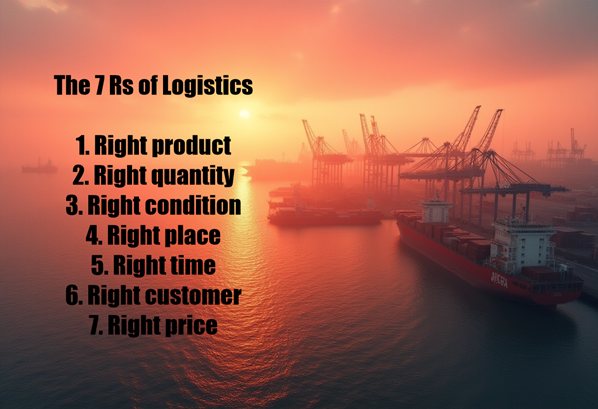
The 7 Rs of Logistics
To navigate the complex landscape of logistics, businesses rely on a core set of principles known as the 7 Rights of Logistics, also known as the 7 R’s.
This framework provides a comprehensive checklist for ensuring that every stage of the supply chain—from sourcing to final delivery—is optimized for efficiency and customer satisfaction.
By mastering these seven components, businesses can create a streamlined, reliable, and cost-effective logistics operation. This guide will walk you through each of the 7 Rs, explaining its importance and offering practical insights to help you implement them effectively.
What Are the 7 Rs of Logistics?
The 7 Rs of Logistics represent the seven key elements that must be correctly managed to achieve a perfect order. The goal is to deliver the right product, in the right quantity and condition, to the right place at the right time for the right customer, all at the right price. When all seven components align, the result is a seamless customer experience and a highly efficient supply chain. Let’s explore each “R” in detail.
1. Right Product
The first and most fundamental principle is delivering the right product. This means ensuring the customer receives exactly what they ordered. A mix-up, where a customer receives the wrong item, size, or color, is a significant service failure that immediately creates a negative experience. It not only disappoints the customer but also triggers a costly reverse logistics process involving returns, replacements, and additional shipping fees.
To get the product right, businesses need robust inventory management and order fulfillment systems. Key practices include:
- Accurate Product Information: Maintain detailed and precise product data, including SKUs, descriptions, and specifications, to prevent confusion.
- Effective Warehouse Management: Organize your warehouse logically to minimize picking errors. Using barcode scanners and warehouse management systems (WMS) can automate verification and significantly improve accuracy.
- Quality Control: Implement checks at various stages, especially before packing and shipping, to confirm the correct item is being sent out.
Failing to deliver the right product erodes customer trust and can lead them to seek out competitors. Getting it right is the first step toward building a loyal customer base.
2. Right Quantity
Next is delivering the right quantity. Sending too few items results in an incomplete order, leaving the customer frustrated and potentially disrupting their own plans, especially in B2B contexts. Conversely, sending too many items creates confusion and initiates a return process the customer did not ask for. Both scenarios lead to increased costs and administrative work.
Precise inventory and order management are essential for achieving the right quantity. This involves:
- Real-Time Inventory Tracking: Use systems that provide up-to-the-minute visibility of stock levels to prevent overselling or stockouts.
- Automated Order Processing: Reduce the risk of manual data entry errors by automating the flow of information from the point of sale to the warehouse.
- Double-Checking Orders: Incorporate verification steps during the packing process to ensure the number of items matches the order slip.
Delivering the correct quantity shows reliability and attention to detail, reinforcing the customer’s confidence in your business.
3. Right Condition
A product that arrives damaged or defective is as problematic as receiving the wrong item. The right condition means the product reaches the customer in the exact state they expect—new, functional, and free from defects. Damaged goods not only result in financial losses from returns and replacements but also severely tarnish a brand’s reputation.
Ensuring products arrive in the right condition requires attention to several areas:
- Appropriate Packaging: Use durable, high-quality packaging materials suited to the product’s size, weight, and fragility. Protective inserts like bubble wrap, foam, or air pillows are crucial for delicate items.
- Careful Handling: Train warehouse staff and logistics partners on proper handling procedures to prevent damage during picking, packing, and loading.
- Supplier Quality Checks: For retailers and distributors, it’s vital to ensure that products received from manufacturers meet quality standards before they even enter your inventory.
A product that arrives in perfect condition reflects the care and professionalism of your brand, contributing to a positive unboxing experience.
4. Right Place
Logistics is fundamentally about movement, and delivering to the right place is a critical component. An order sent to the wrong address—whether it’s an old address, a typo in the street name, or a completely incorrect location—is a major failure. It can lead to lost packages, significant delays, and immense customer frustration as they try to track down their order.
Accuracy in address management is non-negotiable. Best practices include:
- Address Verification Systems (AVS): Integrate AVS tools at checkout to validate addresses in real-time, correcting typos and confirming deliverability before the order is finalized.
- Clear Labeling: Ensure shipping labels are printed clearly and securely attached to the package. Using standardized formats helps carriers process shipments efficiently.
- Customer Confirmation: Allow customers to easily review and confirm their shipping address during the checkout process and in their order confirmation emails.
Delivering to the right place ensures that the final, crucial step of the journey is completed without a hitch.
5. Right Time
In an era of on-demand services, delivering at the right time is more important than ever. Customers expect their orders to arrive within the promised delivery window. Early arrivals can be inconvenient if the customer isn’t ready to receive them, while late deliveries are a common source of dissatisfaction that can drive customers away.
Meeting delivery timelines requires effective planning and coordination:
- Accurate Lead Time Estimates: Provide realistic delivery estimates based on stock availability, processing times, and carrier transit times.
- Efficient Order Processing: Streamline your internal processes to minimize the time between receiving an order and dispatching it.
- Route Optimization: Use route planning software to determine the most efficient delivery routes, reducing transit time and fuel costs.
- Proactive Communication: Keep customers informed about their order status with tracking information and notify them of any potential delays.
Punctuality demonstrates reliability and respect for the customer’s time, which are key drivers of satisfaction and loyalty.
6. Right Customer
Ensuring the package reaches the right customer is the culmination of getting the product, place, and time right. This might seem redundant, but it emphasizes the importance of correctly matching the order to the individual who placed it. Mix-ups can happen, especially with personalized items or orders containing sensitive information.
Securing the final hand-off involves:
- Accurate Order-to-Customer Matching: Double-check that the order contents and shipping label correspond to the correct customer file before dispatch.
- Secure Delivery Options: For high-value items, consider options like “signature required” to confirm the package is received by the intended recipient.
- Clear Customer Identification: Ensure customer names and details are accurately captured and reflected on all order documentation.
Getting the order to the right customer is the final confirmation of a successful transaction and a job well done.
7. Right Price
Finally, all of this must be accomplished at the right price. This “R” has a dual meaning. For the customer, it refers to the total cost of the order, including shipping, being fair and transparent. For the business, it means managing all logistics costs effectively to maintain profitability.
Balancing cost and service quality is a strategic challenge:
- Cost-Effective Shipping: Negotiate favorable rates with multiple carriers and offer a range of shipping options (e.g., standard, expedited) to let customers choose based on their budget and urgency.
- Transparent Pricing: Avoid hidden fees. Clearly communicate all costs, including shipping and taxes, at checkout to build trust.
- Logistics Cost Analysis: Regularly analyze your logistics expenses—including transportation, warehousing, and labor—to identify opportunities for cost savings without compromising service quality.
Achieving the right price ensures the logistics operation is sustainable for the business and acceptable to the customer, creating a win-win situation.
Putting It All Together
The 7 Rs of Logistics are not isolated goals but an interconnected system. A failure in one area can easily cause a domino effect, disrupting the entire process. By systematically addressing each of these seven rights or principles, you can build a resilient and efficient supply chain that consistently delights customers. Adopting this framework helps reduce errors, lower costs, and ultimately drives business growth by fostering a reputation for reliability and excellence.