
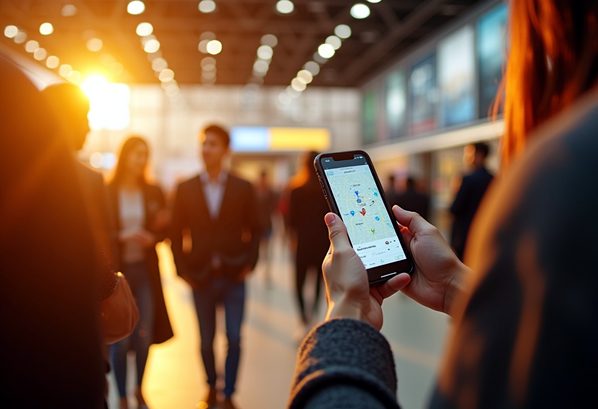
Customer service excellence has become the ultimate differentiator in retail. While businesses invest heavily in training staff and improving processes, many overlook a powerful tool that can transform the entire customer experience: location awareness technology.
Location awareness uses advanced positioning systems, including ultra-wideband (UWB) technology, to pinpoint exactly where customers and staff are within a store environment. This real-time spatial intelligence opens up unprecedented opportunities to enhance service delivery, reduce friction, and create memorable shopping experiences.
The retail landscape has shifted dramatically. Customers expect personalized, efficient service that anticipates their needs rather than simply reacting to them. Location awareness technology makes this possible by providing businesses with actionable insights about customer behavior, movement patterns, and service requirements.
From reducing wait times to optimizing staff deployment, location-aware systems are revolutionizing how retailers approach customer service. Let’s explore ten specific ways this technology can elevate your customer service strategy and drive measurable business results.
1. Optimize staff deployment based on real-time customer density
Understanding where customers congregate within your store allows you to deploy staff more strategically. Location awareness systems track customer density in different areas, enabling managers to redirect team members to high-traffic zones before bottlenecks occur.
When the electronics section shows increased foot traffic, the system can alert management to send additional staff members to assist with inquiries and demonstrations. This proactive approach prevents the frustration that builds when customers wait extended periods for assistance.
Smart deployment also means identifying understaffed areas during peak times. If indoor navigation data shows customers spending longer than average in specific departments, this could indicate insufficient staff support rather than genuine browsing interest.
2. Reduce checkout queue times through predictive analytics
Queue management becomes significantly more effective when you can predict customer flow patterns. Location awareness technology tracks customer movement throughout the store, providing advance warning when large groups are heading toward checkout areas.
This predictive capability allows managers to open additional registers before queues form rather than reacting to already-frustrated customers. By analyzing historical location data, stores can identify peak checkout periods and adjust staffing schedules accordingly.
The result is smoother transaction processing and reduced customer abandonment rates. When customers see shorter, fast-moving lines, they’re more likely to complete their purchases rather than leaving items behind due to time constraints.
3. Enable personalized assistance through proximity alerts
Location-aware systems can trigger personalized service interactions based on customer proximity to specific products or areas. When a customer spends extended time near high-value items, staff can receive discrete alerts to offer assistance at the optimal moment.
This approach respects customer autonomy while ensuring help is available when needed. Rather than overwhelming shoppers with immediate attention, the system identifies genuine interest signals through dwell time and movement patterns.
Staff members receive contextual information about the customer’s location and behavior, enabling them to provide relevant assistance. A customer lingering near camera equipment might benefit from technical expertise, while someone in the baby section might need product safety information.

4. Streamline product location services with indoor navigation
Customer frustration often stems from inability to locate specific products efficiently. Indoor navigation systems powered by ultra-wideband (UWB) technology provide precise, real-time directions to any item within the store.
Customers can use mobile apps to search for products and receive step-by-step navigation instructions, similar to GPS systems but designed for indoor environments. This self-service approach reduces demands on staff time while improving customer satisfaction.
The technology also enables staff to provide accurate location information instantly. When customers ask for directions, employees can access the same navigation system to give precise, efficient guidance rather than vague directional instructions.
5. Monitor and improve customer journey efficiency
Location awareness reveals how customers navigate through your store, highlighting inefficient pathways and confusing layouts. By analyzing movement patterns, retailers can identify areas where customers frequently become lost or spend excessive time searching.
This data drives informed decisions about store layout optimization, signage placement, and product positioning. When indoor navigation data shows customers consistently taking circuitous routes to popular items, it signals opportunities for layout improvements.
Journey efficiency analysis also reveals seasonal or promotional impacts on customer flow. Understanding how special displays or sales events affect movement patterns helps optimize future initiatives for better customer experience.
6. Implement dynamic pricing and promotions based on location
Location-aware systems enable targeted promotional delivery based on customer position within the store. When customers approach specific product categories, they can receive relevant offers or information through mobile applications.
This contextual marketing approach increases promotion effectiveness while reducing customer annoyance from irrelevant messaging. A customer in the sporting goods section receives athletic wear discounts, while someone browsing electronics gets technology-related offers.
Dynamic promotion delivery also supports inventory management objectives. Slow-moving products can be promoted more aggressively to customers who show interest in related categories, improving both customer value and business efficiency.
7. Enhance security while maintaining customer comfort
Location awareness improves security monitoring without creating an intrusive atmosphere. The technology can identify unusual movement patterns or unauthorized access to restricted areas while maintaining customer privacy through anonymized tracking.
Staff receive alerts about potential security concerns without obvious surveillance displays that might make legitimate customers uncomfortable. This balanced approach maintains a welcoming environment while protecting both customers and merchandise.
Emergency response capabilities also improve through location awareness. In case of accidents or medical emergencies, staff can quickly locate affected customers and coordinate appropriate assistance.
8. Facilitate contactless service interactions
Post-pandemic customer preferences increasingly favor minimal physical contact during service interactions. Location awareness enables sophisticated contactless service delivery through mobile applications and automated systems.
Customers can request assistance through their smartphones, with location data ensuring staff members find them quickly without verbal descriptions or physical searching. This efficiency reduces interaction time while maintaining service quality.
Contactless payment integration becomes more seamless when combined with location data. Customers can complete transactions from anywhere in the store, with location verification ensuring security while maximizing convenience.
9. Generate actionable insights for service improvement
The data generated by location awareness systems provides unprecedented insights into customer service effectiveness. Businesses can measure actual service delivery times, identify staff performance patterns, and quantify the impact of service improvements.
Analytics reveal which areas of the store generate the most service requests, helping optimize staff training and resource allocation. Understanding service interaction patterns enables more effective scheduling and performance management.
Long-term trend analysis supports strategic decision-making about store layout, staffing models, and service protocols. Data-driven insights replace guesswork with measurable evidence for continuous improvement initiatives.
10. Support omnichannel service experiences
Location awareness bridges the gap between online and offline customer experiences. Customers can begin interactions through digital channels and seamlessly continue them in physical stores with full context preservation.
Buy-online-pickup-in-store services become more efficient when location systems guide customers to designated pickup areas and alert staff to their arrival. This integration reduces wait times and improves service consistency across channels.
Customer service representatives can access location-based context when assisting with returns, exchanges, or product inquiries, providing more informed and efficient support regardless of the original purchase channel.
Transform your customer service with location intelligence
Location awareness technology represents a fundamental shift in how retailers can approach customer service delivery. By providing real-time insights into customer behavior and needs, these systems enable proactive, personalized service that drives satisfaction and loyalty.
The investment in ultra-wideband (UWB) technology and indoor navigation systems pays dividends through improved operational efficiency, reduced customer complaints, and increased sales conversion rates. Businesses that embrace location awareness gain competitive advantages through superior service delivery capabilities.
Implementation requires careful planning and staff training, but the results speak for themselves. Customers receive faster, more relevant assistance while businesses operate more efficiently and gain valuable insights for continuous improvement.
The future of retail customer service lies in intelligent, location-aware systems that anticipate customer needs and optimize service delivery in real-time. Companies that adopt these technologies now will set new standards for customer experience in their industries.