

The fact that companies can now automate support workflows and help customers in seconds shows just how far technology has come.
And at the center of this shift is AI. From AI-powered customer service tools to chatbots that help agents respond faster, AI is changing the way customer support works.
To understand how this shift is playing out in day-to-day work, we spoke with more than 20 customer experience leaders across industries. They shared where AI truly helps, where it falls short, and where human connection still matters.
This article breaks down the biggest lessons from those conversations, practical insights every support leader needs to navigate AI in 2025.
1. AI Has a Role. It’s Not the One You Think.
The smartest teams are using AI to reduce repetitive work, not human connection. It’s helping categorize tickets, suggest replies, detect sentiment, and route conversations faster. These are tasks that drain time and focus from support reps. When AI takes care of them, agents can focus on what they do best: solving problems, showing empathy, and building trust.
As Miles Goldstein, Global Product and Technical Support Executive, puts it, “Too many companies will try to apply AI where it does not belong. It will be painful and expensive. If we focus on AI as an assistant—helping customers self-serve, guiding agents with workflows, and detecting issues proactively—AI becomes a powerful tool.”
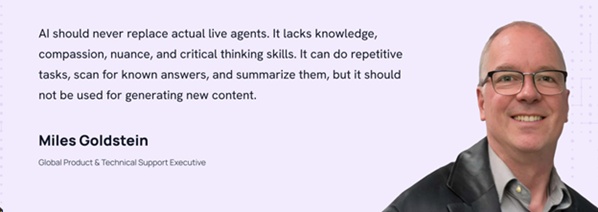
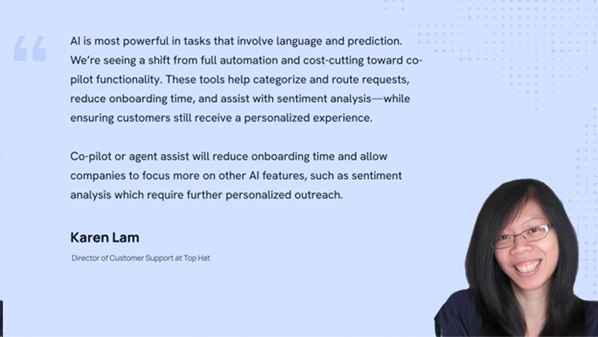
That’s why many CX leaders turn to co-pilot models, where AI acts like an assistant during support. It surfaces helpful context, recommends next steps, and ensures no message slips through the cracks. Karen Lam, who leads support at Top Hat, said it well:
2. AI Makes It Easier to Treat Every Customer Like a VIP
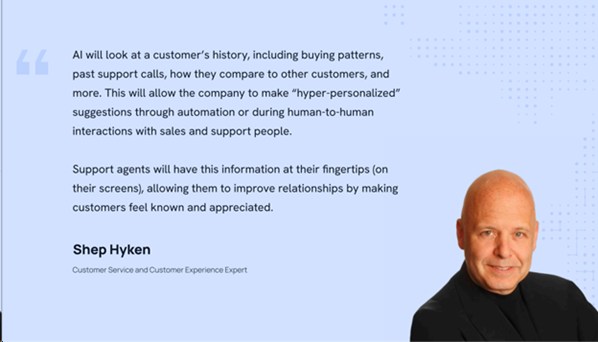
Personalization in customer service used to mean using someone’s name in an email or sending a discount on their birthday. But today’s customers want to feel like brands truly know them, not just their name, but their history, preferences, and pain points.
AI makes that possible.
Modern AI tools can scan a customer’s entire journey, from past purchases and support conversations to browsing behavior, and use that context to help agents respond in a more personal and meaningful way.
This level of personalization builds trust. It also speeds up resolution because customers don’t have to repeat themselves. AI tools can surface relevant details in real time, so agents can jump straight into solving the problem with full context.
3. AI Helps You Listen Between the Lines
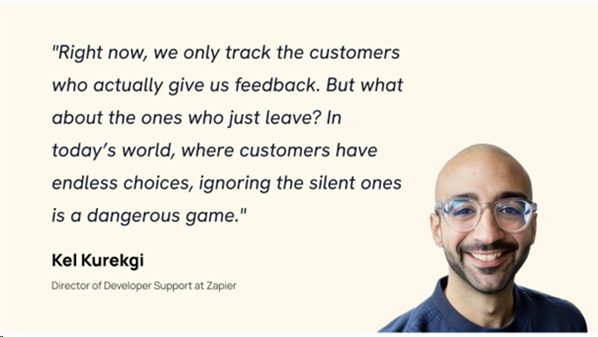
AI tools can analyze the language and tone of customer messages in real time. They can pick up on signs of frustration or urgency, even if the customer hasn’t said it directly. This helps teams act faster, before an issue becomes a churn risk. Kel Kurekgi, Director of Developer Support at Zapier, explained it like this:
With tools like sentiment analysis and conversation intelligence, teams can spot patterns across chats, emails, and tickets. They can see where customer experience is slipping and take action early.
4. AI is making self-service faster, smarter, and more reliable.
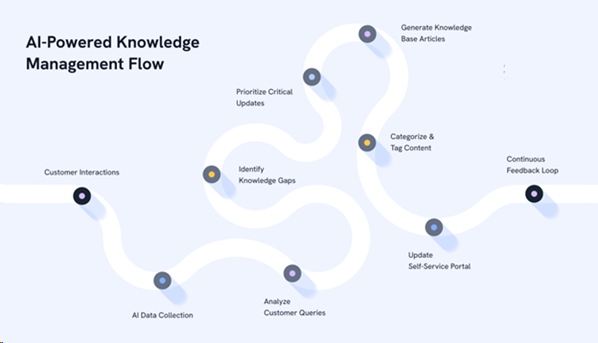
Modern self-service tools can now organize and update knowledge base articles automatically. They track which questions customers ask most, flag content gaps, and even suggest new help articles. This means customers get accurate answers, and agents spend less time hunting for information.
According to Peter Harrison from Zapier, AI is changing knowledge management in support. He says, “One AI trend that’s rapidly gaining traction in customer service and support is AI-enhanced knowledge management systems for more efficient self-service.
These systems are revolutionizing how companies organize, update, and deliver information to both customers and support. The data gathered from these interactions provide valuable insights into customer needs, preferences, and pain points.”
With AI, chatbots are also getting better at handling real conversations. They can ask follow-up questions, guide users step by step, and even complete tasks like processing refunds or account updates.
This kind of self-service doesn’t just reduce support volume. It actually improves the customer experience. People get what they need faster, without waiting for an agent.
5. AI Can Also Help Coach Your Support Team in Real Time
AI is changing not only how customers get help but also how support teams learn and grow.
Instead of relying only on manuals or coaching sessions, support reps are now getting help in the moment. AI can suggest the best next steps during a conversation, surface relevant help articles, or flag gaps in product knowledge as they come up.
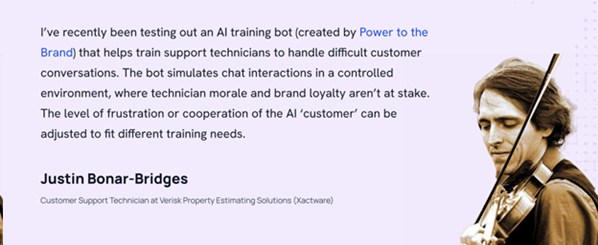
It’s like having a personal coach built into the inbox. Justin Bonar-Bridges, Customer Support Technician at Xactware, shared how AI can be used to simulate difficult customer interactions.
AI is also helping managers. With real-time transcription and post-call summaries, leaders can identify coaching opportunities without listening to every single call. They can see where reps struggled, what phrases worked well, and how to improve team performance.
Where AI Fits Into Your CX Strategy
The most effective CX teams aren’t using AI just to follow a trend. They’re using it to solve real problems like reducing response times, improving handoffs, and keeping conversations from falling through the cracks. And they’re doing it while keeping the human touch intact.
If you’re exploring how AI could support your team, now’s a great time to learn from those already doing it well. Their experiences offer practical guidance on how to use AI in ways that actually make work easier, not more complicated.
👉 Download the full AI in CX Trends Report to get the complete picture.